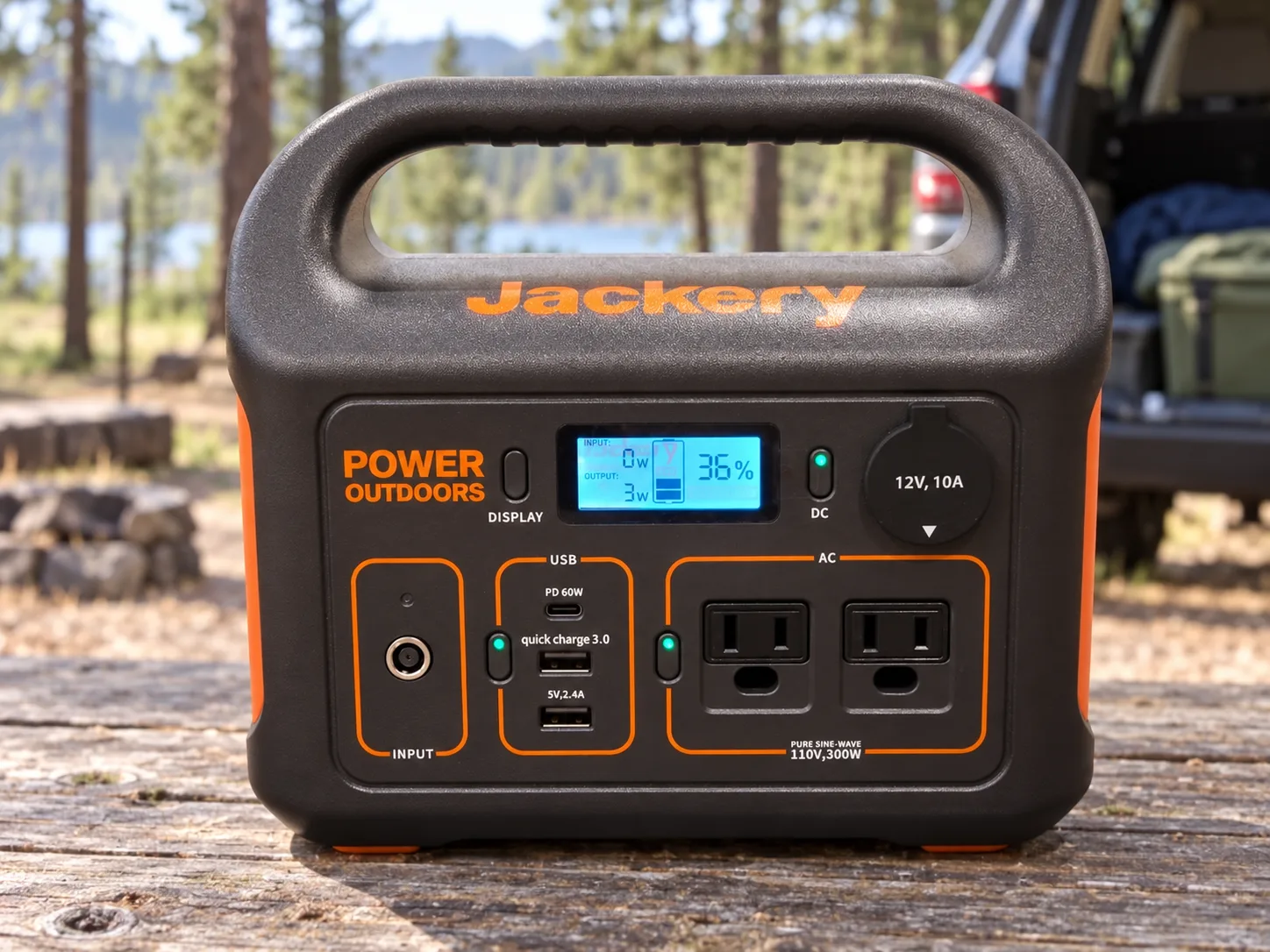
Jackery Explorer 300 Review: Runtime, Uses, and Real Limits

The Jackery Explorer 300 makes the most sense as a grab-and-go battery for road trips, mobile work, and short car-camping stays. It is easy to move between the back seat and campsite, with enough capacity for phones, cameras, laptops, and lights. The catch is its 300W inverter: kettles, heaters, microwaves, and other high-draw appliances are out of its league.

By GearMyRide Editorial TeamResearch-based guidePublished October 1, 2026Updated October 5, 2026
292Wh
Rated capacity
300W
Continuous output
600W
Surge output
7.5 lb
Weight
LiFePO₄
Battery chemistry

Buy it for portability, not appliance power

The Explorer 300 is a practical size for charging everyday electronics during a road trip, workday, or short outage. Move up to a larger power station for cooking, heating, or dependable overnight refrigerator backup.

Best for

Keeping phones, cameras, laptops, lights, and other small electronics running away from an outlet.

Main limit

The 300W inverter—not the remaining battery percentage—stops most appliances that make heat.

Skip if

You need to cook, heat a space, run most microwaves, or cover larger appliances for hours.
Jackery Explorer 300 specs

Dimensions
9.06 × 6.02 × 7.83 in (23 × 15.3 × 19.9 cm)
Battery
292Wh · LiFePO₄
Cycle life
Over 4,000 cycles to 70%
AC output
300W continuous · 600W surge
Wall recharge
About 3 hours to full; about 2.5 hours to 80% via 100W USB-C
Output ports
2 AC · 100W USB-C PD · 2 USB-A · 120W car port
Solar charging
40W and 100W Jackery panel options
Included items
AC adapter, car cable and manual

Where the Explorer 300 fits in a vehicle

Road-trip electronics

Keep it in the back seat or cargo area for phones, camera batteries, a laptop, and campsite lights. At 7.5 pounds, moving it to a picnic table or tent is not much of a chore.

Portable refrigerator

This is a conditional use, not a safe assumption. Check both startup and running watts, then allow for hotter weather and frequent compressor cycling before relying on it overnight.

Emergency backup

Think phones, a router, lights, or a laptop during a short outage. It is much less convincing once the plan grows to heating, cooking, or full-size refrigeration.

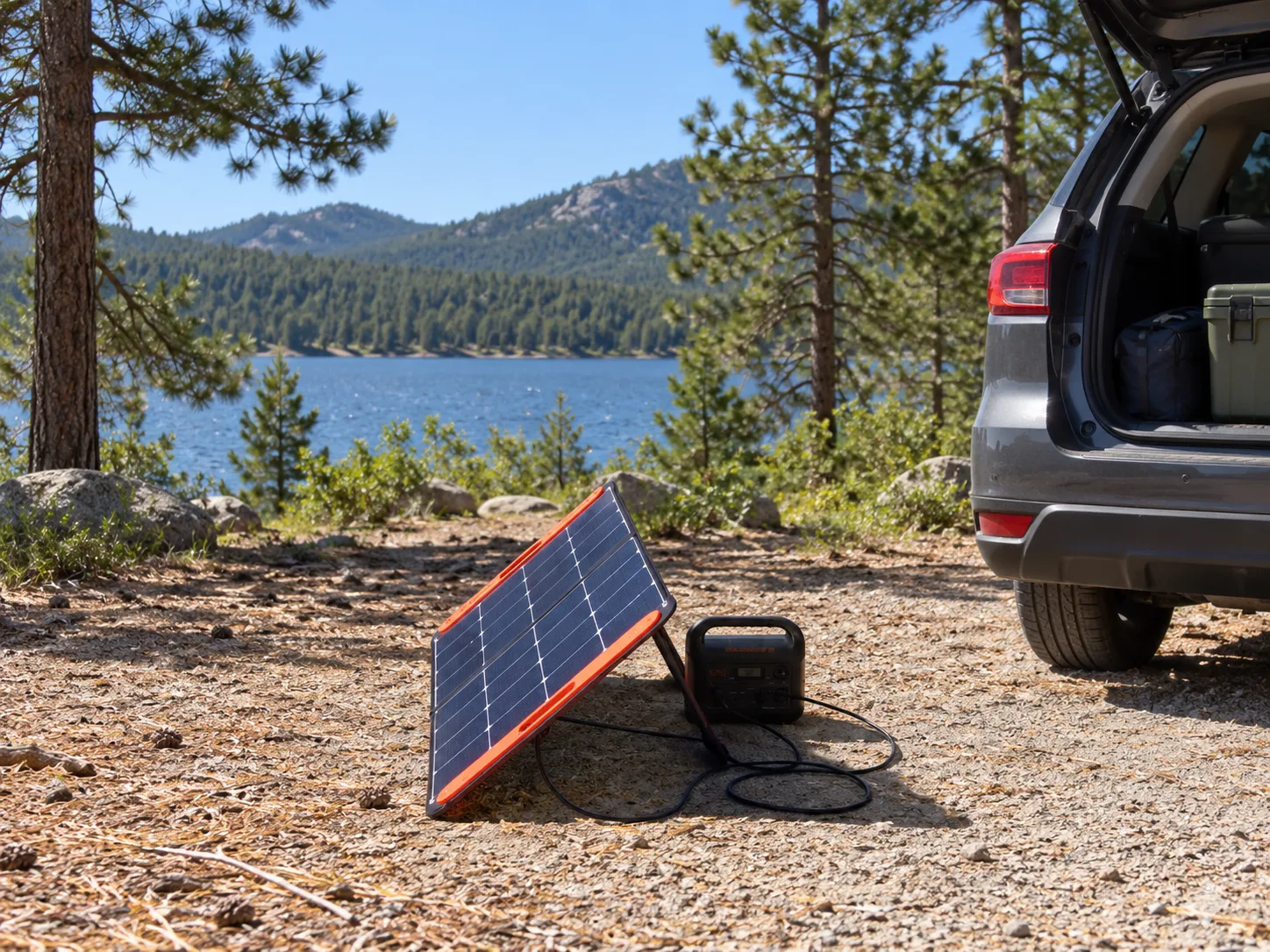
Jackery Explorer 300 connected to a portable solar panel beside an SUV campsite

Solar charging works best as a daytime refill.

40W and 100W Jackery panel options. Under favorable conditions, a 100W panel can reach 80% in approximately 2.8 hours; a 40W panel takes approximately 7.5 hours.

Jackery Explorer 300 runtime: what can it power?

Start with watts, not battery capacity. A device must stay within the 300W output limit before runtime matters. Once it passes that test, the 292Wh battery tells you roughly how long it can run; the estimates below reserve 15% for conversion and operating losses.

Common runtime estimates

Phone charging

15W · USB charging; actual speed varies by phone and cable

About 17 hr

Camera battery charger

20W · Useful for multi-day photo trips

About 12 hr

LED campsite lights

20W · Low, steady evening load

About 12 hr

CPAP machine

40W · Planning example only; follow medical-device guidance

About 6.2 hr

Laptop charger

65W · Typical USB-C work laptop

About 3.8 hr

Portable refrigerator

55W · Average draw can cycle; verify startup demand

About 4.5 hr

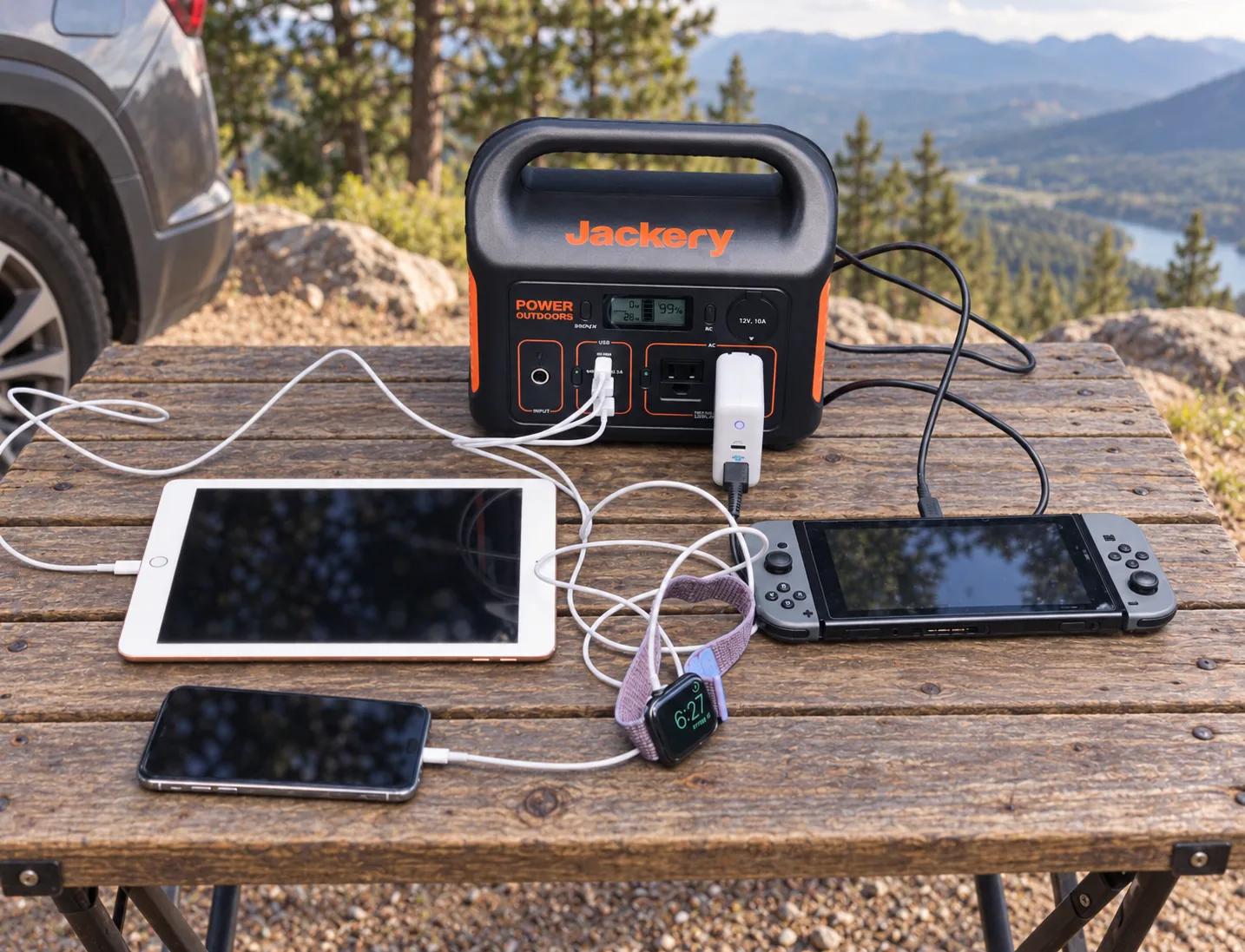
Jackery Explorer 300 charging a tablet, phone, smartwatch, and handheld game console outdoors

Will the Explorer 300 cover your plan?

Add devices, quantities, and hours. Watts test the output limit; watt-hours test the available battery energy.

DeviceQtyHours

This plan fits

15W at once · 120Wh planned

The estimate leaves about 52% of the planning battery energy unused.

Uses 85% of rated capacity for planning. Check each device label for running and startup watts; temperature and battery condition change real results.

Real results vary with startup surge, compressor cycling, temperature, battery condition, conversion losses, and standby use. The estimates reserve 15% of the 292Wh capacity for conversion and operating losses. Medical-device users should follow the device manufacturer’s backup-power guidance and maintain a separate contingency plan.

Explorer 300 vs 300 Plus, 300 v2, and 300D

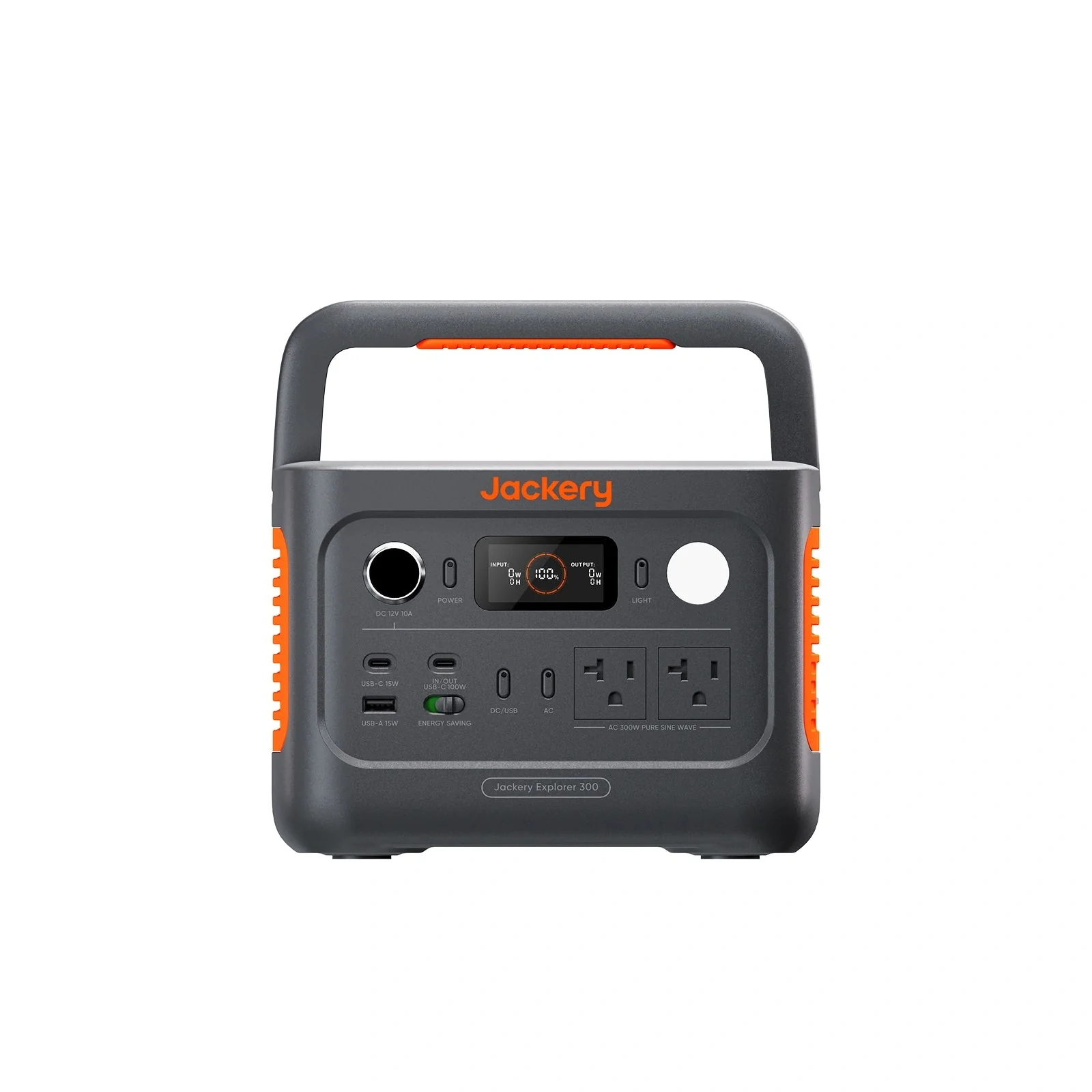
The current Explorer 300 is a 292Wh LiFePO₄ power station with 300W continuous output. The 300 Plus is discontinued, the 300 v2 is its separate successor, and the 300D is a DC-focused model without an AC outlet.

Explorer 300

The 292Wh LiFePO₄ Amazon model covered by this guide; 300W continuous output, 600W peak surge, and a 100W USB-C PD port.

Explorer 300 Plus

A discontinued 288Wh LiFePO₄ generation replaced by the separate Explorer 300 v2.

Explorer 300 v2

A separate 288Wh product with a different enclosure, charging system, and accessory requirements.

Explorer 300D

A 288Wh LiFePO₄ DC-focused power bank with a different port layout and no AC outlet.

Jackery Explorer 300 v2 portable power station

Explorer 300 v2: the current replacement

The Explorer 300 v2 replaces the discontinued Explorer 300 Plus. It keeps the compact 288Wh class while adding current-generation LiFePO₄ battery chemistry.

View the official product page

Listings unavailable when checked

These ratings come from very small samples, so use them as a listing warning—not as a verdict on every unit in the model line.

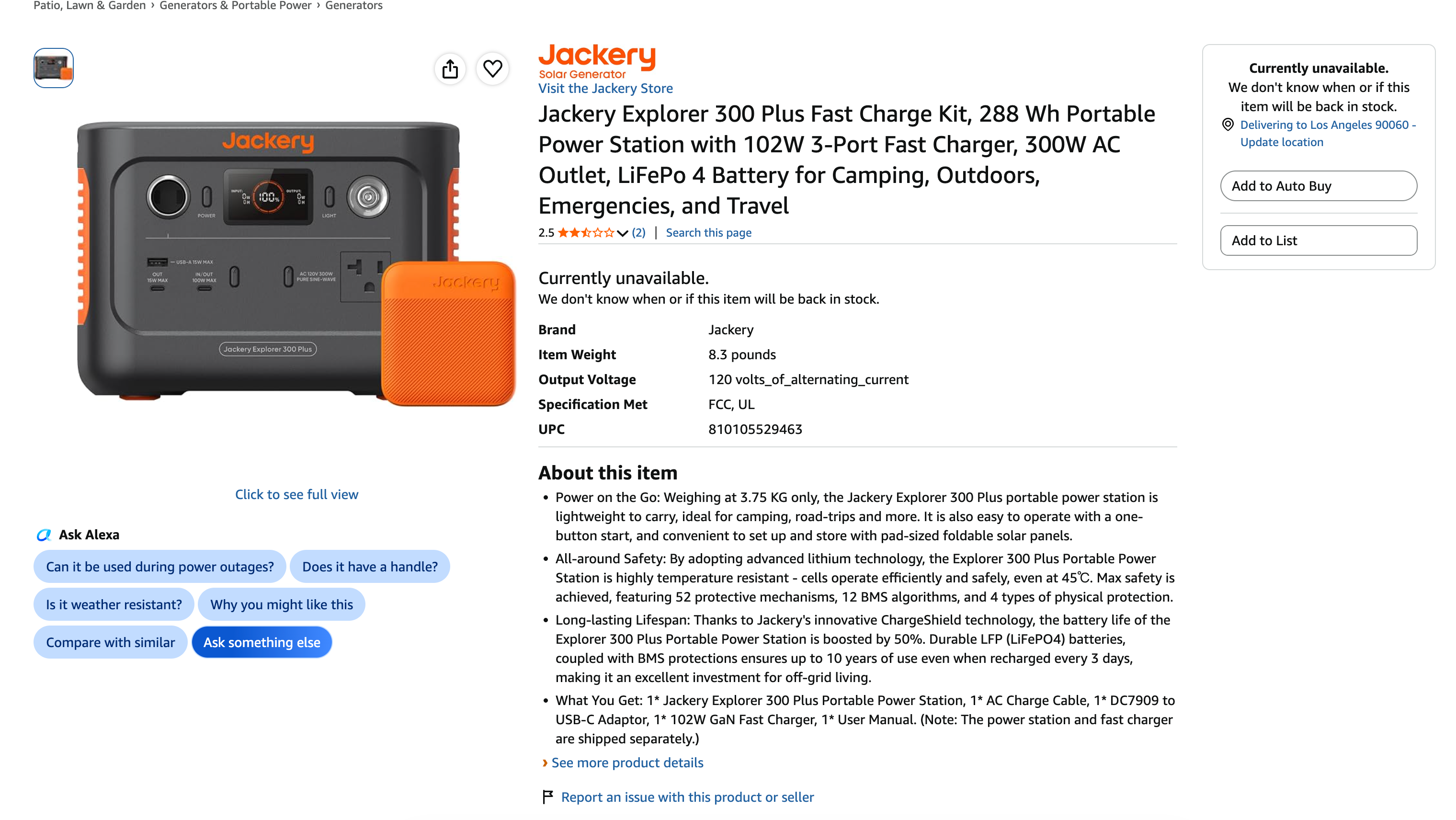
Amazon evidence showing Explorer 300 Plus Fast Charge Kit rating and unavailable status on October 5, 2026

Explorer 300 Plus Fast Charge Kit

Rating
2.5/5
Ratings shown
2
Status
Unavailable

The Explorer 300 Plus is discontinued and replaced by the Explorer 300 v2. Two ratings are too few for a dependable product verdict.

Checked October 5, 2026. Amazon ratings and availability can change.

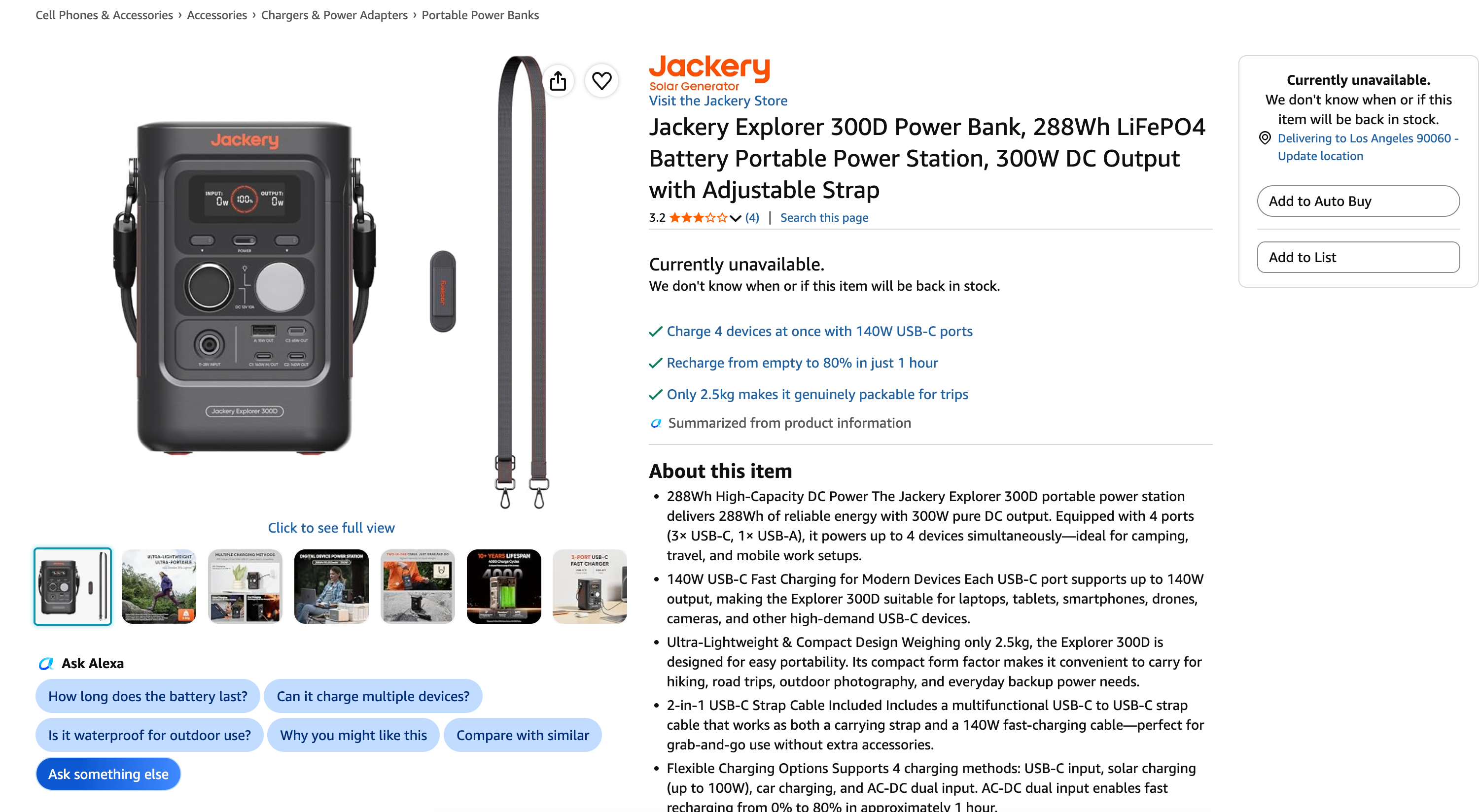
Amazon evidence showing Explorer 300D rating and unavailable status on October 5, 2026

Explorer 300D

Rating
3.2/5
Ratings shown
4
Status
Unavailable

The listing was unavailable when checked. Four ratings are too few for a broad product-quality conclusion.

Checked October 5, 2026. Amazon ratings and availability can change.

View the official 300D page

Shopping for the current Explorer 300?

The station-only listing and solar bundles can share similar names. Confirm the selected style and included accessories before checkout.

See what changes when you step up, step down, or switch brands.

Jackery Explorer 300 v2

Compare it when a newer enclosure, different charging setup, and the 288Wh format better match your packing plan.

Explorer 1000 v2

Move up when you need a refrigerator plus work gear, or any appliance above 300W.

Explorer 300 FAQ.

Does the Jackery Explorer 300 use LiFePO₄?

Yes. The current Amazon Explorer 300 listing specifies a 292Wh LiFePO₄ battery and more than 4,000 charge cycles before reaching 70% capacity.

How is the Explorer 300 different from the 300 Plus and 300 v2?

The current Amazon Explorer 300 has a 292Wh LiFePO₄ battery, 300W AC output, and a 100W USB-C PD port. The 300 Plus and 300 v2 are separate 288Wh generations with different enclosures, ports, charging behavior, and accessories.

Does the Explorer 300 include a solar panel?

Not with the standard power-station package. It includes the station, AC adapter, car-charging cable, and user guide. Choose the 40W or 100W solar bundle if you want a panel included.

Can the Explorer 300 charge from a car outlet?

Yes. A car-port recharge takes approximately four hours, and the standard Explorer 300 package includes a car-charging cable.